
Earthquake‑Prone Building Changes in New Zealand Explained: What Home and Small Building Owners Need to Know
Major reforms to New Zealand’s Earthquake Prone Building (EPB) system are underway, shifting from a %NBS based framework to a targeted, risk-based methodology. The changes will significantly reduce compliance requirements for many buildings while focusing resources on those posing the highest life safety risk.
First, what is EPB and %NBS?
An earthquake-prone building (EPB) is a building that is considered likely to suffer serious damage or collapse in a moderate earthquake, in a way that could cause injury or death. In the past, being labelled an EPB often meant legal timeframes to strengthen the building.
%NBS (Percentage of New Building Standard) compares how a building is expected to perform in an earthquake against today’s building standards for a new building. A lower %NBS does not automatically mean a building is high life safety risk, but it has traditionally been used to decide whether a building was classed as earthquake prone.
Why the EPB system is changing
The current EPB system has captured many buildings that pose low actual risk, while creating:
High strengthening costs
Insurance and lending challenges
Stress and uncertainty for owners
The new approach aims to:
Focus on life safety risk, not theoretical engineering scores
Target known high risk building types
Make strengthening simpler and more affordable
Remove low risk buildings from the system altogether
The biggest change: fewer buildings in the EPB system
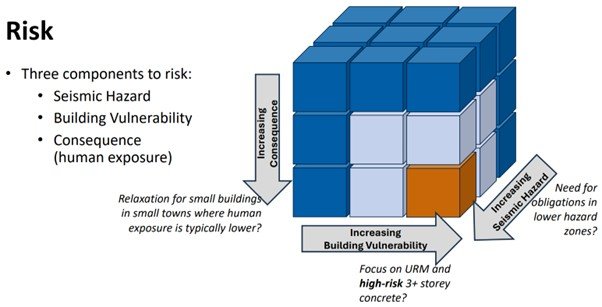
Under the new methodology, two building types will qualify as earthquake prone:
Unreinforced masonry (URM) buildings (typically older brick or stone buildings with little or no steel reinforcement)
Pre modern code concrete buildings that are three storeys or taller
All other buildings (including many previously listed due to low %NBS ratings) will be removed from the EPB register.
What’s changing by region
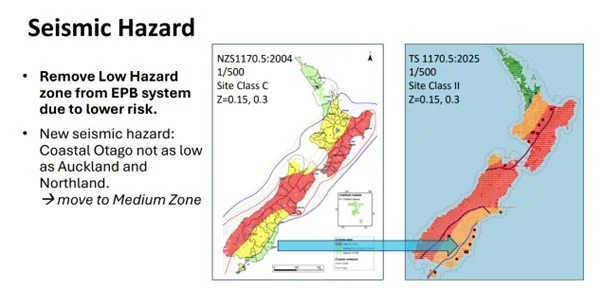
These changes also reflect where earthquakes are more (or less) likely to occur.
Auckland and Northland will no longer have earthquake prone buildings under the new system, due to lower seismic hazard.
Coastal Otago and Southland move into a medium seismic zone, meaning the updated methodology will apply there.
For many owners, this means no more EPB label at all.
%NBS is being removed from EPB regulations
Another major shift is that %NBS will no longer be used to define whether a building is an EPB.
Instead, engineers will identify specific, visible high risk structural features, such as:
Parapets and façades
Heavy appendages
Known brittle concrete failure mechanisms
Importantly, %NBS assessments will still exist outside the EPB framework and will continue to be used for:
Due diligence
Asset valuation
Insurance discussions
Transaction decision making
Lower-cost and more targeted strengthening
Where strengthening is required, the new system focuses on fixing the parts of a building that pose a real danger, rather than upgrading everything.
Examples include:
URM façade securing, which could reduce strengthening costs by up to 80%
Concrete buildings needing work only on high risk elements
Use of standard or template solutions instead of one off designs
This means:
Less disruption
Lower cost
Better safety outcomes
Easier renovations and changes of use
Under the new rules:
Doing seismic work won’t automatically trigger fire or accessibility upgrades
Changing how a building is used will be simpler and cheaper
This removes a major barrier that has stopped many owners from improving or repurposing older buildings.
Health and safety responsibilities clarified
The reforms also clarify obligations under the Health and Safety at Work Act.
In simple terms:
If a building is an EPB and the owner is meeting their Building Act duties, the owner or tenant has no extra seismic duty
If a building is not an EPB, no action is required under this section
This provides welcome certainty for both owners and tenants.
What this means for most home and small building owners
For many people, the outcome is very positive:
If your building is not URM
And it is not an older concrete building over three storeys
There will be no mandatory legal strengthening under the EPB system
However:
Engineering assessments for buying, selling, or alterations will still be common
Understanding your building’s real risk remains important
While the EPB system is changing, engineering due diligence is not going away.
BCD Group can help property owners, investors, and developers:
Interpret whether the new EPB methodology applies to your building
Identify high risk structural features
Provide engineering assessments for sale, purchase, or alteration
Develop targeted, cost effective strengthening solutions where required
If you own, manage, or are considering purchasing an older commercial or heritage building, now is the time to understand how these reforms affect your investment.
Get in touch with our Structural Engineering Team for project specific advice.
References:
https://www.mbie.govt.nz/about/news/earthquake-prone-building-system-changes-announced
Note: This article aims to provide general guidance and should not replace professional advice specific to your project or situation. For professional advice, please contact our team today.